Comparing Medicare Plans: A Step-By-Step Financial Checklist
Table of Contents
Choosing the right Medicare plan isn’t just about picking the one with the most benefits, it’s about understanding how those benefits align with your finances. Whether you’re evaluating options for the first time or looking to refresh your current coverage, carefully weighing costs against expected healthcare needs is essential. Following this step-by-step financial checklist can help you compare different types of Medicare plans, combinations, and income-based costs in a clear, practical way.
Step 1: Understand the Basic Structure of Medicare
Before comparing cost differences, start with a clear understanding of the types of plans available:
-
Original Medicare (Part A and Part B): Part A covers hospital care. Part A costs, including premiums and deductibles, are an important starting point for your financial comparison. Part B covers outpatient care and doctor visits. Most people don’t pay a premium for Part A, but Part B comes with a standard monthly premium that increases with income (known as the IRMAA surcharge).
-
Medicare Advantage (Part C): Also called Medicare Part C plans, these are an alternative to Original Medicare that bundles Parts A and B (and usually Part D) into a single, private plan. Part C plans often come with additional benefits like dental coverage and vision.
-
Prescription Drug Plans (Part D): Standalone coverage for prescriptions. These plans vary in cost depending on the formulary and coverage tiers.
-
Medigap (Supplement) Policies: Private plans that cover the “gaps” in Original Medicare, such as copays, coinsurance, and deductibles.
You can pair Original Medicare + Part D + Medigap, or choose a Medicare Advantage (Part C) plan instead. You generally cannot combine Medicare Advantage with Medigap.
"The biggest mistake I see seniors make when enrolling in Medicare is choosing a plan based only on the monthly premium and not on their doctors, medications, and total out-of-pocket costs. A low premium can end up being expensive if your prescriptions aren’t covered, your providers are out of network, or the plan has high copays and deductibles," says Timothy Baggett, a licensed Medicare agent in Florida.
Step 2: Estimate Your Annual Premium Costs Based on Income
Premiums vary not just by plan type, but by income level. For a complete breakdown of how much Medicare costs in 2026, including premiums, deductibles, and out-of-pocket expenses, start by identifying where you fall in the income brackets used to determine premium adjustments. Retirees with higher modified adjusted gross incomes may pay more for Part B and Part D due to IRMAA surcharges.
Once you know your bracket:
-
Add the monthly Part B premium (and IRMAA, if applicable).
-
Include the cost of a standalone Part D plan if you’re using Original Medicare.
-
If considering Medicare Advantage (Part C) plans, note that some offer $0 premiums, but many others charge small to moderate monthly fees.
-
For Medigap, premiums are not income-based, but they do vary by age, gender, tobacco use, zip code, plan level (Plan G, Plan N, etc.), and the insurance company selling the policy. Outside your Medigap Open Enrollment Period, insurers may also use medical underwriting to set your rate.
Multiply all monthly premiums by 12 to calculate the annual premium cost. Keep that figure available; it will anchor the rest of your comparisons.
Step 3: Anticipate Your Out-of-Pocket Costs
After premiums, the next major component to compare is out-of-pocket spending. This includes deductibles, copayments, and coinsurance.
Original Medicare + Medigap Combination:
With most Medigap plans (e.g., Plan G), your out-of-pocket costs are limited to the Part B deductible and any services not covered. This offers predictability but requires paying a higher monthly premium.
Original Medicare Without Medigap:
You’ll pay 20% of most services after satisfying the deductibles. This could be financially risky for frequent users of healthcare services.
According to Vincent Murray, a licensed Medicare agent in Maine, the financial exposure from skipping supplemental coverage is severe: "There is NO MAXIMUM OUT OF POCKET with Original Medicare. So God forbid you are 6 months in the hospital and have $400,000 worth of bills, you owe 20% and there is no cap. With a supplement, you pay only the Part B deductible, then you pay nothing. With a Medicare Advantage plan, you have a maximum out-of-pocket, usually under $9,000."
Medicare Advantage (Part C) Plans:
Part C plans typically feature copays for every service (office visits, specialist visits, urgent care, etc.). They do set an annual out-of-pocket maximum and once reached, the plan covers 100% of additional costs. Note that maximums vary significantly between plans, ranging from around $3,000 to over $8,000 per year.
"I tell my clients that while we can, most of the time, find plans with a zero dollar premium, all Medicare Advantage plans have copayments and coinsurance for most services on the back-end. Someone who is healthy and only sees their primary care doctor once a year can save money vs. paying for a Medigap plan, but it’s a risk-reward decision. A few days in the hospital or an unexpected need for cancer infusions can change that equation very quickly," says Rich Baker, a licensed Medicare agent in Colorado. He adds that he walks every client through the copays in the Summary of Benefits and the plan’s Maximum Out of Pocket so they understand their full potential financial exposure before signing up.
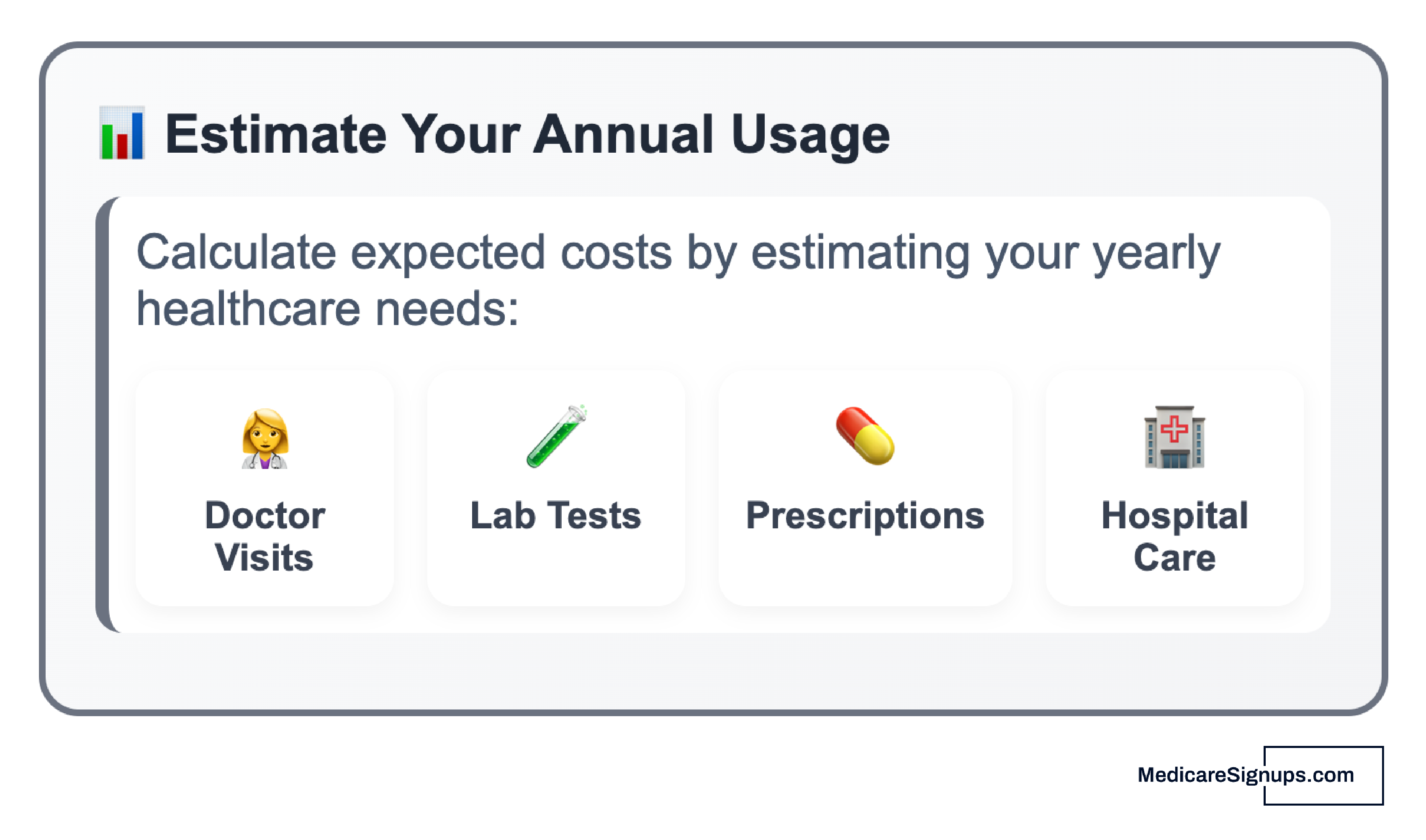
Create a rough estimate of how many doctor visits, lab tests, prescription refills, and hospital visits you expect in a typical year. Then apply approximate copay amounts from the plans you’re comparing. Even a high-level estimate will clarify whether a low-premium but high-copay plan is truly cost-effective for your situation.
Step 4: Factor In Prescription Coverage
Prescription costs can swing the total cost of a plan dramatically.
If using Original Medicare, research the formulary of different Part D plans and estimate annual prescription spending using your current medications. Make sure to include deductible amounts and tier-based coinsurance rates.
"Often we find that the zero-dollar premium and low-cost Part D plans cover most drugs," says Steven Litzsinger, a licensed Medicare agent in Missouri. "Before you overpay for a Part D plan, verify your medications are on the plan’s formulary for the year and compare the cost for the medications. When carriers have more than one Part D plan, they can also have different cost-share requirements and tier levels that will impact your out-of-pocket cost."
If considering a Medicare Part C (Advantage) plan, confirm that your medications are covered under the included prescription benefit. Some low-cost Advantage plans look attractive on paper until you discover your primary medication is out-of-network or falls in a high-cost tier.
Step 5: Account for Unexpected or Long-Term Care Costs
One of the most overlooked cost categories is unexpected or chronic-care expenses. Ask yourself:
-
Do I expect more frequent care due to existing conditions?
-
How would emergency hospitalizations impact my budget under each plan?
-
Will travel or living in multiple states require broader coverage?
For example, a Part C plan with a low out-of-pocket maximum might cost slightly more in monthly premium but may offer valuable protection in a year with unexpected health events. Likewise, someone who rarely visits doctors but takes regular prescriptions may find a low-premium Advantage plan more affordable than Medigap.
Step 6: Re-Calculate Annually
Medicare costs aren’t static. Premiums and copays change each year, and your personal financial situation may evolve. Keep an eye on upcoming changes to Medicare that could affect your costs. During the Annual Enrollment Period, use the official Medicare Plan Finder to compare current-year premiums, formularies, and out-of-pocket costs side by side:
-
Recalculate your total estimated cost by repeating the same premium + spending process.
-
Compare how your current plan stacks up against newly available plans.
-
Consider whether changes to income (moving into or out of IRMAA thresholds) will impact your monthly cost.
"Each year, review the Summary of Changes by checking for changes in monthly premiums, deductibles, copays, coinsurance, and your annual maximum out-of-pocket. Small increases can add up over the year," says Derene Derricotte, a licensed Medicare agent in New Jersey. "Also confirm your doctors and hospitals, review your prescription drug coverage, and look over your extra benefits compared to last year. You can review and change plans during the Annual Enrollment Period, October 15 – December 7. Changes take effect January 1."
Even if you’ve been happy with your plan for years, a quick recalculation might reveal better value elsewhere.
Find What Works for You…
There’s no Medicare plan that works for everyone. A higher-income earner who expects frequent specialist visits might ultimately spend less under an Original Medicare + Medigap pairing, despite higher monthly premiums. A retiree on a fixed income with relatively low ongoing healthcare needs may benefit more from the predictable structure of a Medicare Part C (Advantage) plan. By walking through this checklist and calculating your total costs (rather than focusing on premiums alone) you can make a more confident and financially sound Medicare decision.