Understanding What's Covered by Medicare
Table of Contents
Medicare is a federal health insurance program for people who are 65 or older, as well as certain younger individuals with disabilities. It's made up of four distinct parts, each covering different types of healthcare services. Understanding what each part covers — and what it doesn't — is essential for making informed decisions about your healthcare.
Who's Covered by Medicare?
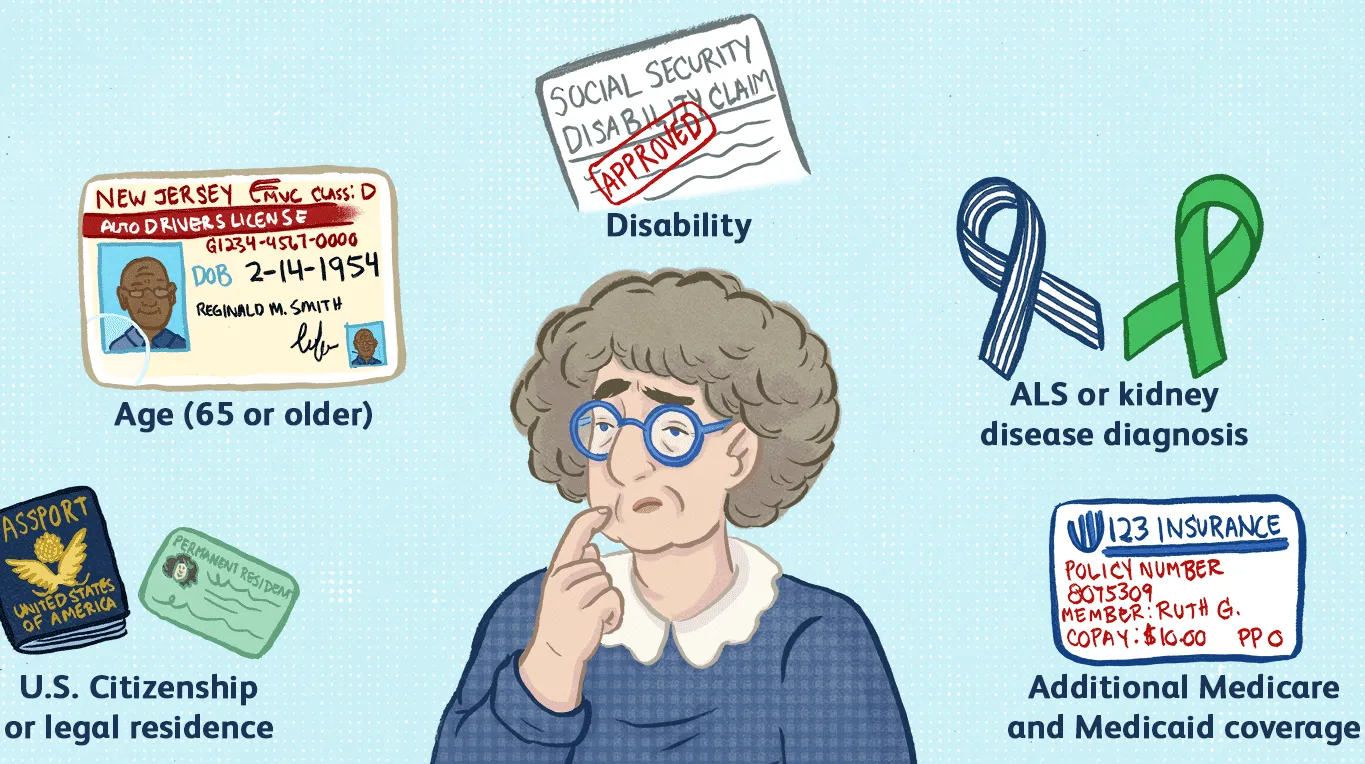
Medicare coverage is available to three main groups:
- Adults 65 and older who are U.S. citizens or legal permanent residents (with 5+ years of residency)
- People under 65 with certain disabilities who have received Social Security Disability Insurance (SSDI) for at least 24 months
- People of any age with End-Stage Renal Disease (ESRD) or ALS (Lou Gehrig's disease)
Most people become eligible for Medicare at 65, and many are enrolled automatically if they're already collecting Social Security. If you're not, you'll need to sign up during your Initial Enrollment Period to avoid late penalties.
Part A: Hospital Insurance
Medicare Part A covers inpatient care and services you receive inside a healthcare facility. This includes:
- Inpatient hospital stays — semi-private rooms, meals, nursing services, and medications administered during your stay
- Skilled nursing facility care — up to 100 days per benefit period following a qualifying hospital stay
- Hospice care — comfort care for terminally ill patients, including medications for pain management
- Some home health services — part-time skilled nursing care or therapy if you're homebound
Most people don't pay a monthly premium for Part A if they or their spouse paid Medicare taxes while working. However, there are deductibles and coinsurance costs that apply to longer hospital stays.
"Medicare Part A helps cover inpatient hospital stays, skilled nursing facility care, hospice care, and some home health services. For most people, Part A is premium free because they or their spouse paid Medicare taxes while working — earned 40 quarters. Keep in mind, though, that there can still be deductibles and other out-of-pocket costs," says Stephanie Calvillo, a licensed Medicare agent in Texas.
Part B: Medical Insurance
Part B covers medically necessary outpatient services and preventive care. This includes:
- Doctor's visits — both primary care and specialist appointments
- Outpatient procedures — surgeries, lab tests, X-rays, and diagnostic services
- Preventive services — annual wellness visits, flu shots, cancer screenings, and cardiovascular checks
- Durable medical equipment — wheelchairs, walkers, oxygen equipment, and other medically necessary devices
Part B requires a monthly premium (deducted from your Social Security check for most beneficiaries) and a yearly deductible. After the deductible, you typically pay 20% coinsurance for most services. That 20% has no annual cap under Original Medicare, which is why many beneficiaries look for additional protection.
"The leading cause of bankruptcy filings is medical debt, and for that reason I recommend additional coverage to either pick up all or part of what Medicare doesn't cover, or choose a plan that gives maximum out-of-pocket protection," says LaTosha Turknett, a licensed Medicare agent in Texas.
Medicare Part C: Medicare Advantage Plans
Medicare Advantage plans (Part C) are offered by private insurance companies as an alternative to Original Medicare. These plans must cover everything Parts A and B cover, but many also include additional benefits such as:
- Dental coverage
- Vision insurance
- Hearing exams and hearing aids
- Wellness programs and gym memberships
Most Medicare Advantage plans also include Part D prescription drug coverage built in. Plans vary by location, and each has its own network of doctors, hospitals, and pharmacies. There are several types of Medicare Advantage plans — including HMOs, PPOs, and Special Needs Plans — each with different rules for how you access care.
"Original Medicare generally covers about 80% of approved costs and does not include most dental, vision, or prescription drug coverage. Medicare Advantage plans often include drugs, dental, vision, and other extra benefits, and may cover services at 100% after copays, deductibles, or coinsurance are met," says Mary Brown, a licensed Medicare agent in New Jersey. "The best option depends on your doctors, medications, health needs, and budget."
Part D: Prescription Drug Coverage
Medicare Part D helps cover the cost of prescription medications. These plans are offered by private insurers and each has its own formulary — a list of covered drugs organized by cost tiers. Key things to know:
- Plans vary in which drugs they cover and how much you pay
- There may be a coverage gap (donut hole) where your costs temporarily increase
- You can compare plans during enrollment periods to find the best fit for your medications
One of the biggest recent improvements to Part D is the new annual out-of-pocket cap. "There is now a $2,000 annual out-of-pocket cap on Part D drugs. That includes your deductible, copays, coinsurance, and all covered prescriptions — even expensive biologics. Once you hit $2,000 total for the year, you pay $0 for covered drugs after that," says Lauren Fodde, a licensed Medicare agent in Missouri. She adds an important caveat: "This only applies to Part D drugs. If your biologic is given in a doctor's office under Part B, this cap does not apply, and the drug must still be on your plan's formulary."
What Medicare Doesn't Cover
Original Medicare has notable gaps. It generally does not cover:
- Routine dental, vision, or hearing care
- Long-term custodial care (nursing home care that isn't skilled nursing)
- Cosmetic surgery
- Most care received outside the United States
"Original Medicare does not cover preventative and comprehensive dental care, routine vision care, hearing aids, long term care, and care outside of the US. Medicare Advantage plans typically include coverage for dental, vision, and hearing within the plan, and there are also ancillary plans that offer dental, vision, hearing, long-term care, and coverage outside of the US," says Bonnie Beliveau, a licensed Medicare agent in North Carolina.
To fill these gaps, many beneficiaries add a Medicare Supplement (Medigap) plan to help cover out-of-pocket costs like copays, coinsurance, and deductibles, or choose a Medicare Advantage plan that bundles extra benefits.
Choosing the Right Coverage
The best Medicare coverage depends on your individual health needs, budget, and preferred doctors. Understanding how much Medicare costs across premiums, deductibles, and out-of-pocket expenses is a good place to start. One key difference between Original Medicare and Medicare Advantage is how each handles your worst-case-scenario spending.
"The downside with Original Medicare is that there is no max out of pocket, so if someone is having a tough year health-wise, they're paying 20% of everything, and if they end up in the hospital it's a $1,736 deductible per benefit period. At least with a Medicare Advantage plan, you have a max out-of-pocket amount each year, meaning you won't pay more than that amount," says Donna Berube, a licensed Medicare agent in New Hampshire.
Reviewing your options during each enrollment period ensures you're not paying more than necessary or missing out on benefits that could help you. If you're unsure where to start, a local Medicare insurance agent can walk you through your options at no cost.