Medicare Supplement Enrollment Periods: When You Can Sign Up for Medigap
Table of Contents
Medicare Supplement (Medigap) enrollment periods determine when you can sign up for a plan and whether an insurer can reject you or charge more based on your health. Understanding these windows is critical — the difference between enrolling at the right time and missing your window can mean thousands of dollars in higher premiums or being denied coverage altogether.
The Medigap Open Enrollment Period
Your Medigap Open Enrollment Period (OEP) is a one-time, six-month window that begins the month you are both 65 or older and enrolled in Medicare Part B. During this period, you have guaranteed issue rights — meaning insurance companies:
- Cannot deny you coverage
- Cannot charge you more because of pre-existing conditions
- Must sell you any Medigap policy they offer in your area
This is the single best time to buy a Medigap plan. Once this window closes, you may never get these protections again in most states. (Medicare.gov explains the same rules on its when to buy Medigap page.)
How the Open Enrollment Period Works
The six-month clock starts on the first day of the month you turn 65 and have Part B. For most people, this lines up with their 65th birthday month. However, if you delay Part B enrollment (for example, because you have employer coverage), your OEP starts when you do enroll in Part B — even if that’s after age 65. For example, if you enroll in Part B at age 68 after retiring, your Medigap OEP begins that month, not on your 65th birthday.
This is an important distinction, and it comes up constantly when people leave a job in their late 60s or early 70s. "If you’re just now activating Medicare Part B because you’re losing group coverage, that triggers your Medigap Open Enrollment Period — a six-month window where you can enroll in any Medigap plan (like Plan G or N) with no health questions asked," says Chad Hardy, a licensed Medicare agent in Texas. "If you already had Part B and are simply losing employer coverage, you may instead qualify for a Guaranteed Issue window, which gives you 63 days to enroll in certain Medigap plans with no underwriting." In other words, you don’t lose your OEP by delaying Part B for legitimate reasons like active employment, but the trigger event matters — whether it’s activating Part B for the first time or losing creditable group coverage.
Guaranteed Issue Rights (Outside the OEP)
Even after your OEP closes, federal law provides guaranteed issue rights in certain situations. These let you buy a Medigap plan without medical underwriting. Common triggers include:
- Your Medicare Advantage plan leaves your area or stops offering coverage
- You leave a Medicare Advantage plan within the first 12 months to return to Original Medicare
- Your employer group health plan coverage ends
- Your Medigap insurance company goes bankrupt or misleads you
"You may still have guaranteed issue after the general Medicare Open Enrollment period ends, but only in specific qualifying situations, such as losing other health coverage or moving out of your Medicare Advantage plan’s service area," says Mark Boone, a licensed Medicare agent in Minnesota. "These rights are separate from the initial six-month Medigap Open Enrollment Period and allow you to purchase a Medigap policy without medical underwriting during these events." When guaranteed issue rights apply, insurers must sell you a Medigap Plan A, B, C, F, K, or L (depending on what they offer) at the standard rate, with no health questions asked. One important caveat for newer beneficiaries: Plans C and F are only available to people who became eligible for Medicare before January 1, 2020. If you became eligible on or after that date, comparable guaranteed issue protections generally apply to Plans D and G instead. The catch is that the qualifying event has to actually fit one of the federal triggers, and you usually have a tight 63-day window to act once it does.
What Happens If You Miss Your Open Enrollment Period
If you miss your Medigap OEP and don’t have guaranteed issue rights, insurers in most states can:
- Deny your application based on your health history
- Charge higher premiums for pre-existing conditions
- Impose waiting periods before covering existing health issues (typically only if you had a break in creditable coverage of more than 63 days)
This process is called medical underwriting, and it’s the primary reason timing matters so much with Medigap enrollment. "Medicare supplement applicants who do not apply during their open enrollment period (when turning 65) or other qualifying event must complete underwriting in order to be accepted for coverage. This includes answering multiple health questions as determined by the carrier," says Susan Rittenberry, a licensed Medicare agent in Alabama. "Applicants who have been diagnosed with serious illnesses generally would not qualify for a Medicare supplement." That’s a hard truth that surprises many people who assume they can switch to Medigap whenever they want — if you have chronic conditions or a complex medical history, getting approved outside the OEP can be difficult and expensive, and in some cases impossible.
The Annual Enrollment Period and Medigap
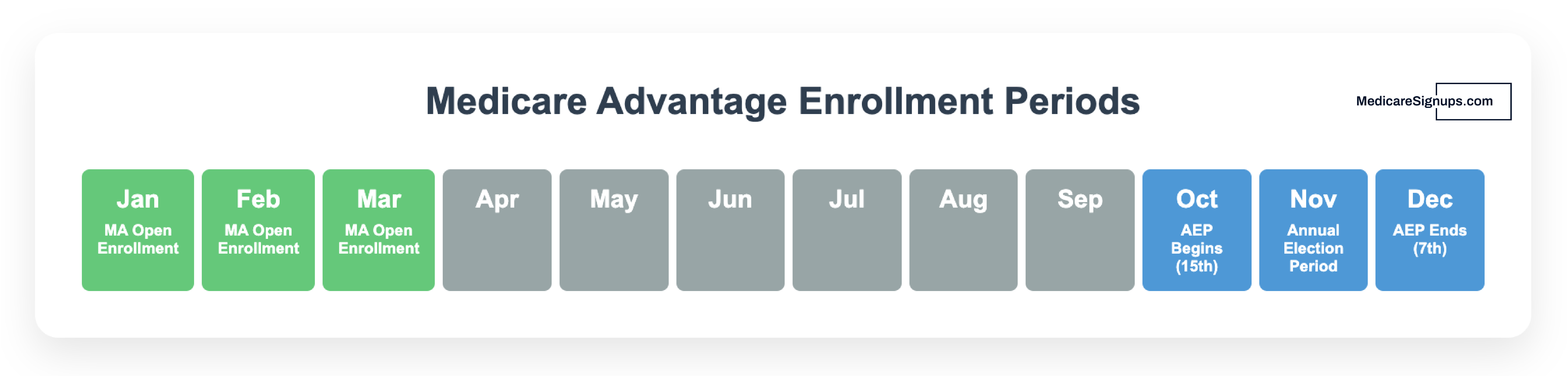
The Annual Enrollment Period (AEP), which runs from October 15 to December 7, is primarily for Medicare Advantage and Part D changes — not for Medigap. A common misconception is that you can freely switch Medigap plans during AEP.
"If you switch from one Medigap (Supplemental) plan to another, you’ll usually have to answer health questions and may be denied or charged more based on your health," says Mary Manos-Mitchem, a licensed Medicare agent in Ohio. "However, if you’re in your Medigap Open Enrollment Period or have certain guaranteed issue rights — such as losing other coverage or trying an Advantage plan for the first time — you can change plans without answering health questions." So if your goal during AEP is to move from one Medigap plan to another, expect underwriting unless one of those specific protections applies.
State Medigap birthday rule and anniversary rules
Some states do offer their own annual Medigap windows that go beyond the federal minimum. The most well-known of these is the "birthday rule." "The states that have birthday rules are CA, DE, ID, IL, IN, KY, LA, MD, MO, NV, OK, RI, UT, WV, and WY," says Kevin Chaikin, a licensed Medicare agent in Virginia. "The rules vary by state in terms of enrollment windows and allowable changes, but all of those states have a birthday rule. Those windows typically vary between 30 and 60 days following a birthday. Changes are typically a like-for-like change, such as Plan G to Plan G, while others allow you to also drop down a level in coverage, such as Plan G to Plan N. This list does not include states like NY, MA, ME, CT, and WA, which have more lenient rules where changes can be made without underwriting outside of a birthday window." If you live in one of these states, your options for switching plans are dramatically better than in the rest of the country — but the specific rules really do vary, so confirm what your state allows before assuming a switch is automatic.
Comparing Your Options: Medigap vs. Medicare Advantage
If you’ve missed your Medigap window, one alternative is a Medicare Advantage plan. Unlike Medigap, Medicare Advantage plans cannot deny you during AEP regardless of your health status. They often include extra benefits like vision, dental, and hearing coverage.
However, Medicare Advantage and Medigap are fundamentally different products. Medigap works with Original Medicare and lets you see any provider that accepts Medicare. Medicare Advantage replaces Original Medicare with a managed network. Understanding the different Medigap plans and how they compare to MA plans is essential before making a decision.
Frequently Asked Questions
When can I enroll in a Medicare Supplement plan?
The one time you can enroll in any Medigap plan without answering health questions is your six-month Medigap Open Enrollment Period, which begins the month you are 65 or older and enrolled in Part B. Outside that window, you can still apply anytime, but insurers can use medical underwriting unless you qualify for a federal guaranteed issue right or live in a state with a birthday or anniversary rule. The rules for 2026 are the same as prior years — there is no annual open enrollment for Medigap the way there is for Medicare Advantage.
What happens to my Medigap plan if I move to a new state?
Your Medigap coverage is generally portable across state lines — you don’t have to re-apply or go through underwriting again. Your premium may change based on the rating rules and zip code in your new state, and some plans sold in one state aren’t offered in another (in which case the carrier will typically move you to a comparable plan). Notify your insurer as soon as you move so your billing and provider information stay current.
Do I have to renew my Medigap plan every year?
No. Medigap policies are guaranteed renewable as long as you pay your premium, meaning the insurer can’t drop you because of your health or age. There is no annual re-enrollment for Medigap the way there is for Medicare Advantage or Part D.
Can I switch Medigap plans during the fall Annual Enrollment Period?
Generally, no. The AEP (October 15 – December 7) is for Medicare Advantage and Part D changes. Switching Medigap plans outside your OEP usually requires medical underwriting unless you have a guaranteed issue right or live in a state with a birthday or anniversary rule.
How to Protect Yourself
The most important thing you can do is enroll during your OEP. Here’s a simple timeline:
- Three months before turning 65: Start researching Medigap Plan G vs. Plan N and other popular options in your area.
- The month you turn 65 and have Part B: Your six-month OEP begins. Apply for the plan you want.
- Within six months: Finalize your enrollment. After this window, guaranteed issue rights end for most people.
If you’re already past your OEP, don’t assume you’re stuck. Contact a local Medicare agent who can check whether you qualify for guaranteed issue rights or help you find insurers in your area that are more lenient with underwriting. Understanding your Medigap eligibility options is the first step.