Medicare and Medicaid: How Dual Eligibility Works
Table of Contents
About 12.8 million Americans are enrolled in both Medicare and Medicaid at the same time. These "dual-eligible" beneficiaries get a combination of benefits that neither program provides on its own, covering gaps like dental care, vision, hearing, and long-term services that Original Medicare largely leaves out.
If you or a family member has limited income and qualifies for Medicare, understanding how these two programs work together could save thousands of dollars a year in out-of-pocket costs.
What Does Dual Eligibility Mean?
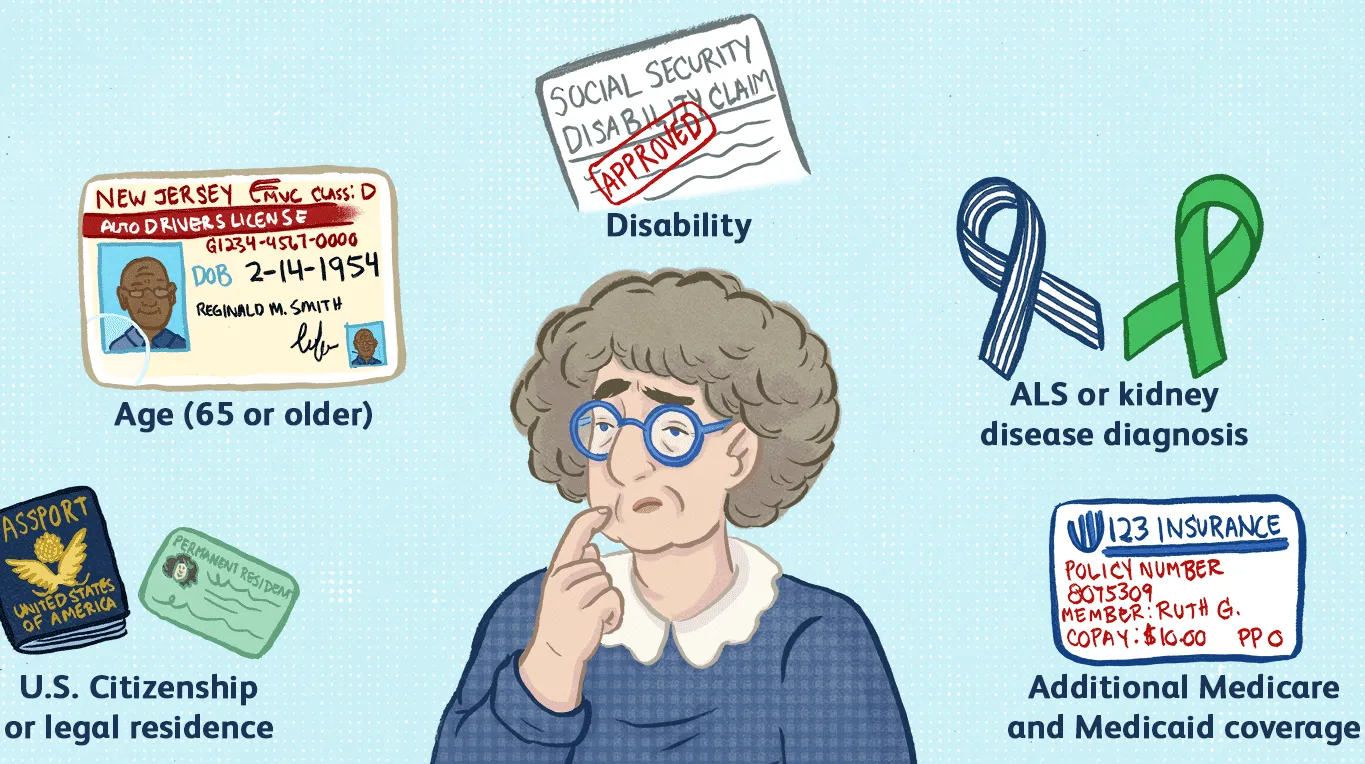
Dual eligibility simply means a person qualifies for both Medicare and Medicaid. Medicare is the federal health insurance program primarily for people 65 and older or those with certain disabilities. Medicaid is a joint federal-state program for people with limited income and resources.
When someone meets the eligibility requirements for Medicare and also falls within their state's Medicaid income and asset limits, they can receive benefits from both programs simultaneously. Medicare acts as the primary payer for hospital and medical services, while Medicaid picks up remaining costs and adds coverage Medicare does not offer.
Agents who work with lower-income clients often see people stumble at this first step because they treat Medicare and Medicaid as a single application. "Medicaid is a separate agency from Medicare, administered by individual States, for low-income folks. Apply through Department of Health and Human Services in your state. If you qualify for Medicaid, it can go along with your Medicare. This is referred to as dual-eligible," says Daniel Greer, a licensed Medicare agent in Michigan. He adds that some clients also qualify for Extra Help for prescription drug costs, which uses slightly higher income brackets than Medicaid itself.
Full vs Partial Dual Eligible: What's the Difference?
Not all dual-eligible beneficiaries receive the same level of help. The distinction comes down to whether you qualify for full Medicaid benefits or only partial assistance through a Medicare Savings Program.
Full Dual Eligible
Full dual-eligible individuals qualify for their state's complete Medicaid benefit package on top of their Medicare coverage. This typically includes:
- Dental, vision, and hearing services that Medicare does not cover
- Long-term care in nursing facilities or through home and community-based services
- Transportation to medical appointments
- Personal care services and assistance with daily living activities
- Little to no cost-sharing for Medicare-covered services (Medicaid pays your premiums, deductibles, and copays)
Full dual eligibility is the most comprehensive safety net in the U.S. healthcare system. Your Medicare coverage handles doctor visits, hospital stays, and outpatient care, while Medicaid wraps around it to cover practically everything else.
Partial Dual Eligible
Partial dual-eligible individuals qualify for one of the Medicare Savings Programs (MSPs) but not for full Medicaid benefits. There are four levels:
- Qualified Medicare Beneficiary (QMB): Pays Part A and Part B premiums, deductibles, copays, and coinsurance
- Specified Low-Income Medicare Beneficiary (SLMB): Pays Part B premiums only
- Qualifying Individual (QI): Pays Part B premiums only (higher income limit than SLMB)
- Qualified Disabled and Working Individual (QDWI): Pays Part A premiums only
Partial Medicaid vs full Medicaid: the biggest difference is what Medicaid actually pays for. Full Medicaid covers your Medicare cost-sharing and adds a broader benefit package (dental, vision, hearing, long-term care, transportation). Partial Medicaid through an MSP only pays specific Medicare premiums, deductibles, or coinsurance depending on which of the four levels you qualify for. There are no added services beyond Medicare itself.
Partial dual eligibility still provides real financial relief. Even if you only qualify for help with your Part B premium, that covers the full standard monthly premium (well over $180 for most beneficiaries) plus deductibles and coinsurance for many enrollees.
One detail people often miss: MSPs go by more than one name depending on the state. "Medicare Savings Programs (MSP) can help people with limited income cover their Medicare premiums, deductibles and other costs like co-insurance. This is also known as a Medicare Buy-In program," says Justin Sonon, a licensed Medicare agent in Pennsylvania. He notes that Extra Help for Part D drug costs can be applied for at the same time as an MSP, which saves an extra trip through paperwork.
How Medicaid Fills the Gaps in Medicare
Medicare was never designed to cover everything. Several major categories of care fall outside its scope, and for dual-eligible beneficiaries, Medicaid steps in to fill those gaps.
Dental Care
Original Medicare does not cover routine dental care. No cleanings, fillings, dentures, or extractions. For people on fixed incomes, this creates a serious problem. Medicaid dental benefits vary by state, but most states cover at least emergency dental services, and many provide preventive and restorative care as well. If you are dual-eligible, choosing the right dental coverage becomes much simpler because Medicaid handles what Medicare will not. For those not dual-eligible, it is worth knowing whether Medicare covers dental on its own.
Vision Care
Medicare Part B covers a limited set of eye-related services (like glaucoma screening and cataract surgery), but it does not pay for routine eye exams, glasses, or contact lenses. Medicaid fills this gap for dual-eligible beneficiaries, typically covering annual eye exams and at least one pair of eyeglasses per year. If vision coverage has been a concern, dual eligibility may solve it.
Hearing Services
Medicare does not cover hearing aids or routine hearing exams. Given that roughly one-third of adults over 65 have some degree of hearing loss, this is a significant gap. Most state Medicaid programs cover hearing exams and hearing aids for dual-eligible beneficiaries, though the specific benefit (brand options, replacement frequency) varies by state. Some Medicare Advantage plans also help pay for hearing aids, but Medicaid generally offers broader hearing coverage for those who qualify.
Long-Term Care
This is the biggest gap Medicare leaves open. Medicare covers short-term skilled nursing care after a hospital stay (up to 100 days under strict conditions), but it does not cover custodial or long-term care in a nursing facility. Medicaid is the primary payer for long-term care in the United States, covering nursing home stays and home and community-based services for people who meet both medical and financial eligibility criteria.
For dual-eligible beneficiaries who need ongoing assistance with daily activities like bathing, dressing, and eating, Medicaid's long-term care benefit is often the most valuable part of their coverage.
The catch is that getting to Medicaid coverage for nursing home care often requires depleting your assets first, a process known as a Medicaid spend-down. "Medicare provides zero Long Term Nursing Home Care funding. Per the 2025 Medicare and You Handbook, there are only TWO Nursing Home coverage options: Medicaid or private Long Term Care Insurance," says Christopher Boyd, a licensed Medicare agent in Indiana. He warns that Medicaid spend-down laws vary by state and change year to year, so families relying on this safety net should understand their own state's rules well before care is needed.
D-SNPs: Medicare Advantage Plan Costs and Benefits for Dual-Eligible Beneficiaries
Dual Eligible Special Needs Plans (D-SNPs) are a specific type of Medicare Advantage plan designed exclusively for people who have both Medicare and Medicaid. These plans coordinate benefits from both programs under a single plan, which can simplify the experience significantly.
D-SNPs are one of three Special Needs Plan categories, and the distinction matters when comparing options. "There are a few different types of Special Needs Plans. First a Dual Eligible Special Needs Plan or D-SNP, is for people that are Medicare & Medicaid eligible. Second there are Chronic Special Needs Plans, C-SNP which are for people with a chronic disease or illness such as diabetes, chronic kidney disease, COPD and other specific illnesses," says Steve Houchens, a licensed Medicare agent in Kentucky. If you are dual-eligible, the D-SNP is the variant built around your situation.
What D-SNPs Offer
- Coordinated care management between Medicare and Medicaid providers
- A single ID card and one point of contact for questions about either program's benefits
- Low or $0 premiums and minimal cost-sharing
- Extra benefits that often include over-the-counter health product allowances, meal delivery after hospital stays, transportation, and fitness programs
- Prescription drug coverage (Part D) built into the plan
D-SNP Cost: What Dual-Eligible Beneficiaries Actually Pay
D-SNP costs are usually minimal because Medicaid picks up most out-of-pocket expenses. Many D-SNPs carry a $0 monthly premium, and copays and coinsurance are either $0 or a few dollars for QMB-level enrollees. If you are full dual-eligible, Medicaid pays your Part A and Part B premiums, so the D-SNP itself typically adds no new cost. Partial dual eligibles may see a small monthly premium depending on the plan and their MSP level. Use the Medicare Plan Finder at medicare.gov/plan-compare to see the exact premium, deductible, and copay structure for the D-SNPs available in your area.
D-SNPs have grown rapidly over the past decade. In 2025, over 7 million dual-eligible beneficiaries were enrolled in a D-SNP, according to the Medicare Payment Advisory Commission. The appeal is straightforward: instead of managing separate Medicare and Medicaid paperwork, everything runs through one plan.
Not every D-SNP works the same way, though. Some are "fully integrated" (FIDE-SNPs), meaning they handle both Medicare and Medicaid benefits in a single package. Others coordinate with the state Medicaid program but do not directly administer Medicaid benefits. When comparing D-SNPs, ask specifically what Medicaid services are included in the plan versus what you would still access through your state's Medicaid program separately.
Extra Help (Low-Income Subsidy) for Part D Drug Costs
Prescription drug costs are a major concern for people on limited incomes. The Extra Help program, also called the Low-Income Subsidy (LIS), reduces what you pay for Medicare Part D prescription drug coverage.
If you are full dual-eligible, you automatically qualify for Extra Help. Partial dual eligibles and some other low-income Medicare beneficiaries may also qualify. The benefit covers:
- Part D monthly premiums (paid in full or significantly reduced)
- Annual deductible (eliminated or reduced)
- Copays for prescriptions (reduced to a few dollars per fill, or $0 in some cases)
With the new $2,000 annual out-of-pocket cap on Part D costs that took effect in 2025, drug spending is already more manageable for all Medicare beneficiaries. But Extra Help goes further, cutting costs to near-zero for those who qualify.
Income limits for Extra Help are higher than many people assume. According to Clarence "Mark" Christiansen, a licensed Medicare agent in Wisconsin, "single tax filers making up to $1,976 monthly gross income with no more than $17,600 in assets (couples: $2,665 / $35,130) should qualify for Extra Help for Medicare Part D also referred to as LIS (Low Income Subsidy)." He recommends applying at ssa.gov/extra-help, by phone with Social Security, or at your local SSA office rather than walking in unannounced. The dollar limits Mark cites are refreshed by Social Security every year, so verify the current thresholds on the SSA page before you apply.
About 3 million people who qualify for Extra Help are not enrolled, according to estimates from the Social Security Administration. If you have limited income and are paying full price for prescriptions under Part D, it is worth checking whether you qualify.
Income and Asset Limits: Who Qualifies?
Dual eligibility requirements depend on which program and which level of assistance you are seeking. Medicare eligibility is based on age (65+) or disability, regardless of income. Medicaid eligibility, however, is income- and asset-based, and limits vary significantly by state.
Here are the general federal thresholds, which the Centers for Medicare & Medicaid Services update each year:
Full Medicaid (Dual Eligible)
- Income limits typically range from 100% to 138% of the Federal Poverty Level (FPL), depending on the state and whether it expanded Medicaid
- Asset limits also vary, though many states have eliminated asset tests for certain Medicaid groups
- Your home, one vehicle, and certain other assets are generally excluded from the count
Medicare Savings Programs (Partial Dual Eligible)
- QMB: Income up to 100% of the Federal Poverty Level (roughly $1,300/month for an individual, updated each year)
- SLMB: Income up to 120% FPL (roughly $1,550/month)
- QI: Income up to 135% FPL (roughly $1,750/month)
- Asset limits for MSPs were eliminated in 2024 under the Inflation Reduction Act
- Check Medicare.gov's Savings Programs page for the current-year FPL figures before you apply
Because Medicaid rules differ so much from state to state, two people with identical incomes in different states could have very different dual-eligible status. Contacting your state Medicaid agency or your local State Health Insurance Assistance Program (SHIP) office is the most reliable way to find out where you stand.
How to Apply for Dual Enrollment in Medicare and Medicaid
There is no single "dual eligibility" application. Instead, you apply to each program separately.
Step 1: Make sure your Medicare is in place. If you are not yet enrolled, you can apply through the Social Security Administration at ssa.gov, by phone at 1-800-772-1213, or at your local Social Security office.
Step 2: Apply for Medicaid through your state. Each state runs its own Medicaid program. You can typically apply online through your state's Medicaid website, in person at a local Department of Social Services or Human Services office, by phone, or by mail. Many states also accept applications through the federal marketplace at healthcare.gov.
Step 3: Apply for Extra Help if needed. If you qualify for full Medicaid, Extra Help enrollment is automatic. Otherwise, apply through the Social Security Administration at ssa.gov/medicare/part-d-extra-help or by calling 1-800-772-1213.
Step 4: Consider a D-SNP. Once you have both Medicare and Medicaid, you are eligible to enroll in a Dual Eligible Special Needs Plan. D-SNP enrollment is available during the Annual Election Period (October 15 to December 7), but dual-eligible beneficiaries also get a Special Enrollment Period every quarter, meaning you can switch plans in January, April, July, or October.
Key Takeaways for Dual-Eligible Beneficiaries
- Dual eligibility is not all-or-nothing. Even partial assistance through a Medicare Savings Program can save you over $2,200 per year on Part B premiums alone.
- Medicaid covers what Medicare cannot. Dental, vision, hearing, long-term care, and transportation are the biggest additions.
- D-SNPs simplify your experience. If you are managing two separate programs, a D-SNP can consolidate them into one plan with coordinated benefits.
- Extra Help is free money for prescriptions. If you have limited income and are paying out of pocket for Part D drugs, check your eligibility immediately.
- Rules vary by state. Income limits, covered services, and application processes all depend on where you live. Your state Medicaid agency and local SHIP counselor are the best resources for state-specific guidance.